
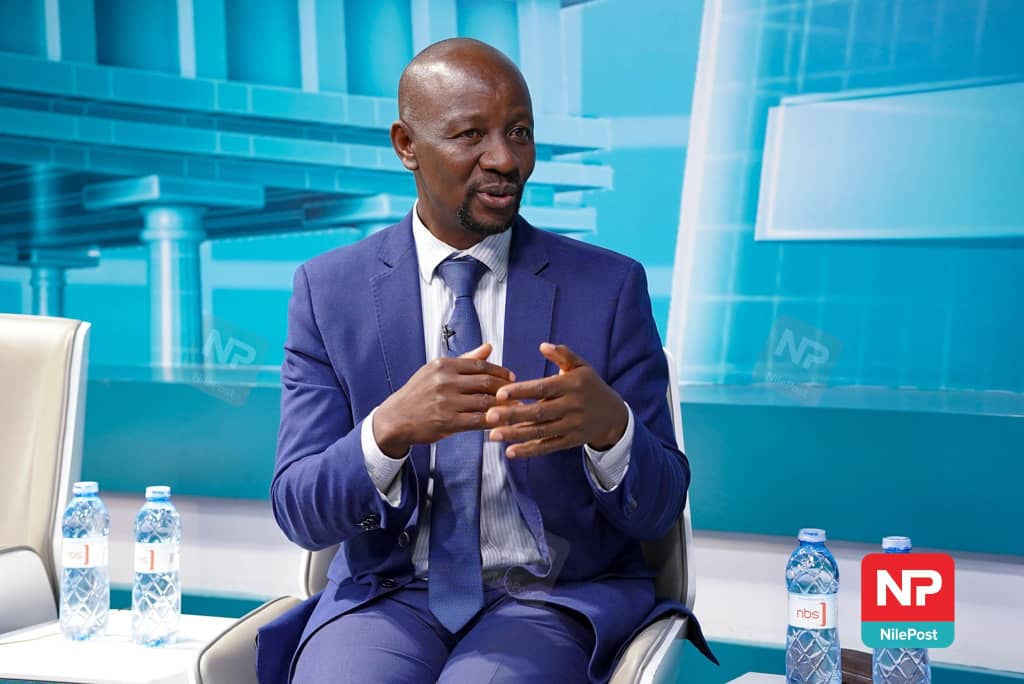
The People’s Front for Freedom (PFF) secretary general and former Kira Municipality MP Ibrahim Ssemujju Nganda has said government performance under the National Development Plan III (NDP III) was below 25 per cent across all sectors over the last five years, arguing that the plan’s implementation fell far short of its intended targets.
Speaking during the Frontline programme on NBS Television, Ssemujju said it was possible to objectively assess government performance based on its own development framework.
“It’s easy to judge government. In the last 5 years we were implementing NDP III. The performance of government on the NDP III, which it assigned itself, was below 25 per cent across all sectors,” he said.
NDP III, which ran from the 2020/21 financial year to 2024/25, is Uganda’s third five-year National Development Plan, designed to guide public investment towards job creation, household income improvement, and industrialisation under the broader Vision 2040 agenda.
The plan prioritised agro-industrialisation, tourism development, mineral-based development, and private sector growth, but has faced repeated criticism over implementation gaps and funding constraints.
Ssemujju also weighed in on the Parish Development Model (PDM), the government’s flagship poverty alleviation programme launched in 2022/23 and designed to channel funds directly to parish-level SACCOs to support household enterprise development and shift subsistence households into the money economy.
He argued that the programme should not be judged by the number of beneficiaries who receive the Shs1 million parish-level funding, but by its broader economic impact.
“One doesn’t judge the success of PDM based on the number who received the money. PDM should be judged based on the transformation it has done,” Ssemujju added.
The PDM is structured around seven pillars, including financial inclusion, infrastructure development, production, storage, value chain development, and governance, with government projecting that it will lift millions of Ugandans out of subsistence farming by improving access to affordable credit at parish level.
However, critics have raised concerns about delays in disbursement, duplication of existing community programmes, and limited capacity at parish SACCO level, while supporters argue that it is already stimulating small-scale enterprise growth in rural areas.
In response, Senior Presidential Advisor on Political Mobilisation Moses Byaruhanga defended the programme, saying many beneficiaries are already reporting improvements in production and livelihoods.
“On average, every PDM beneficiary employs two people. So when you look at the beneficiaries, over 7 million people have been employed,” Byaruhanga said.
Government officials have previously maintained that PDM is a long-term structural intervention expected to deliver visible economic results over time, as opposed to immediate short-term outcomes.
